Obsession
December 27, 2025
Today I turn twenty years old.
At twenty years old, Alexander had ascended to the throne of Macedon, Picasso had painted The Death of Casagemas, and Zuckerberg had already founded Facebook. To be twenty is to desire greatness.
Yet what does it mean to be great? Conquest is antiquated. The arts are saturated. Now only technology stands as the final frontier for human progress and ambition.
Over the past year, I have become utterly obsessed with building the future of AI personal assistants. Honestly, it sounds almost like a tarpit idea 1, but I believe deeply in my bones that it's possible to build a product as personalized and useful as J.A.R.V.I.S. from Iron Man, only practical for the average person.
This obsession has led me to write hundreds of thousands of lines of code and to build a fully-fledged email client prototype. Every proof of concept I built was met with positive feedback from peers and initial users, yet I never officially released any of them (much to the dismay of my friends and, especially, my mother). I hold myself, and by extension, my work, to a high standard, and I'm in no rush to build products that merely work without providing their users magical moments: interactions that make the user smile with awe at why a seemingly insignificant detail was included, or be perplexed at how a certain feature can be so useful and intuitive. Experiences so unique that they make all similar products obsolete. Software that has function and soul.
Increasingly, people around me have been saying that I may be too obsessed with what I'm building. They are probably right. By my estimate, over 90% of my waking hours this past year have been spent working or deeply reflecting upon the work I have done. Many of my peers can't understand how I'm able to work all day, and I usually don't have a better answer than the fact that I am obsessed with it.
That doesn't mean that I necessarily enjoy my work all the time. Sometimes, it's agonizing to refactor large swaths of code, track down minute bugs, or come to the realization that the approach you've been working on for the past week was incorrect.
I think the future belongs to those who let this kind of obsession gnaw them to the bone. Those who stay up way past reasonable hours, fighting off exhaustion through a mix of pure determination and excitement. As my father has told me, achieving greatness requires holding your hand over the fire until it's too much for others to bear.
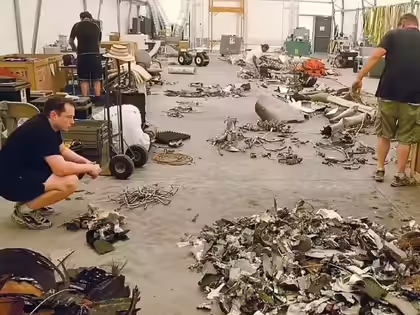
SpaceX failed for six years before they built a functional rocket.
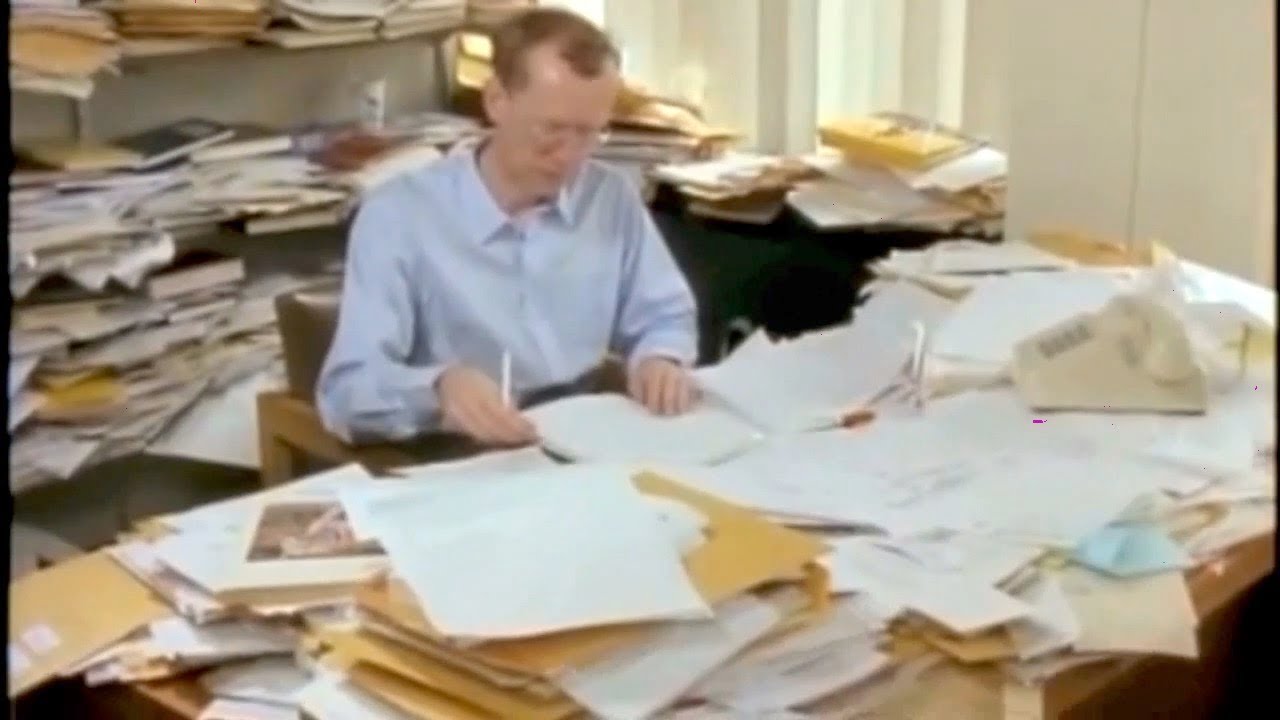
Andrew Wiles toiled for seven years before proving Fermat's Last Theorem.
Leonardo da Vinci carried the Mona Lisa with him for sixteen years, obsessively adding minuscule layers until his death.
I'm twenty years old, and I'll hold my hand over the fire for as long as it takes.
Footnotes
-
The "Tarpit Idea" was first popularized by Paul Graham and other YC members. It's an idea that sounds so obviously good that it attracts many people, but is so difficult to execute that most who try get stuck. ↩